The Uncomfortable Truth About Homelessness and the Rental Market
There is a danger when talking about homelessness that the numbers become so large that we stop thinking about the people they represent.
40,688 homelessness applications. 17,240 households in temporary accommodation. 10,180 children without a permanent home.
They become statistics in government reports, percentages on charts and arguments in political debates.
But every case of homelessness is an individual tragedy.
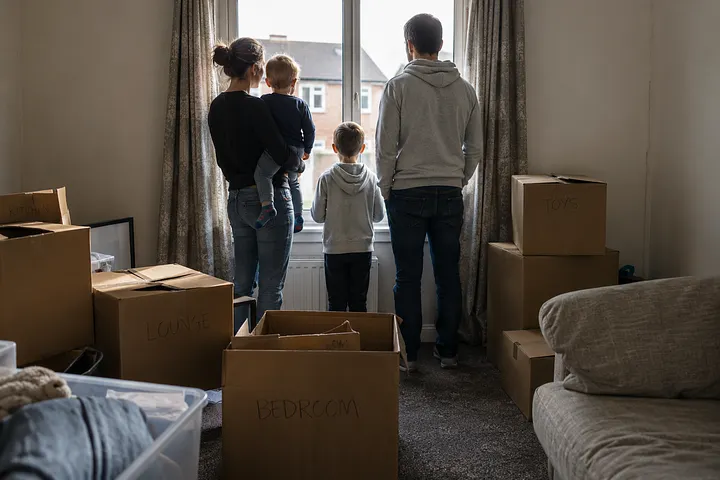
It’s a parent putting their family’s possessions into bags because they don’t know where they will be living next. A child travelling further to school because their temporary accommodation is nowhere near the community they know. Someone trying to keep their job while moving between relatives, hotels or temporary accommodation.
Homelessness doesn’t necessarily mean sleeping on the street. It can mean spending months — sometimes years — without somewhere that really feels like home.
Before debating landlords, regulation or housing economics, we need to remember that this is ultimately what housing policy is supposed to prevent.
Scotland’s homelessness problem in numbers
The latest full-year Scottish Government statistics show just how significant the problem has become.
Scotland, 2024/25 | Number |
|---|---|
Homelessness applications | 40,688 |
Households assessed as homeless | 34,067 |
People within those households | 53,720 |
Children within those households | 15,046 |
Households in temporary accommodation at 31 March 2025 | 17,240 |
Children in temporary accommodation | 10,180 |
Households reporting rough sleeping the night before applying | 2,465 |
Behind the 34,067 households assessed as homeless were 53,720 individual people, including more than 15,000 children.
And 97% of those households were assessed as unintentionally homeless.
Temporary accommodation is also becoming an increasingly significant part of the system. At 31 March 2025, 17,240 Scottish households were living in temporary accommodation, 6% more than a year earlier.
The average time between a household being assessed and its homelessness case being closed has increased from 257 days in 2020/21 to 280 days in 2024/25.
For the person experiencing it, that’s not “280 days”.
That’s birthdays. Christmas. School terms. Commuting to work. Children asking when they’re going home.
It is a significant part of someone’s life spent without the security most of us take for granted.
This isn’t just a Scottish problem
The latest English statistics paint an equally concerning picture.
At 31 March 2026 there were 135,580 households living in temporary accommodation in England — the highest number on record.
Of those, 86,460 were households containing children.
Some families are remaining within the temporary accommodation system for extraordinary periods. Among households with children, the most common duration was between two and five years, accounting for 22,060 households.
Think about what that means for a child.
A five-year-old could potentially spend almost their entire primary-school education without a settled home.
This isn’t simply a housing-market problem. It affects education, employment, health, relationships and communities.
And that makes understanding how people enter the homelessness system particularly important.
The private rental market matters
The private rented sector is sometimes discussed as though it sits separately from homelessness and social housing.
It doesn’t.
In England between January and March 2026, 39,200 households were assessed as being threatened with homelessness and were therefore owed a prevention duty.
The single largest reason was the end of a private rented Assured Shorthold Tenancy.
Reason for threatened homelessness | Households | Share |
|---|---|---|
End of private rented AST | 14,120 | 36.0% |
Family/friends no longer willing to accommodate | 9,260 | 23.6% |
Other reasons | 15,820 | 40.4% |
Total | 39,200 | 100% |
The end of a private tenancy has remained one of the two most common reasons for households being owed a homelessness prevention duty in every quarter since 2018.
This doesn’t mean landlords are responsible for homelessness.
Far from it.
Relationships break down. Circumstances change. Tenants move. Landlords sell. Mortgage costs change. Properties are inherited. People lose jobs. Rents become unaffordable.
Housing is complicated.
But the figures demonstrate something that is sometimes lost in the political discussion:
the health of the private rental market and our ability to tackle homelessness are connected.
Getting people out matters as much as preventing them getting in
There is another important part of the English figures.
Between January and March 2026, 35,130 households reached the end of a homelessness prevention duty.
Around 55% secured accommodation for at least six months.
But 8,770 — one quarter — became homeless.
Once someone enters the homelessness system, finding another permanent home becomes enormously important.
And this is where the availability of rental properties matters again.
Local authorities can build social housing. Governments can fund temporary accommodation. Housing associations can increase supply.
But none of these can instantly replace the enormous number of homes currently provided by private landlords.
If fewer rental properties are available, competition for those that remain inevitably increases.
For someone with a strong salary, savings, excellent references and a perfect credit history, competition is inconvenient.
For somebody leaving temporary accommodation, rebuilding their life, receiving benefits or carrying financial scars from previous difficulties, competition can be devastating.
They aren’t simply competing for a property.
They are competing against applicants who may look considerably safer on paper.
What should housing policy actually be trying to achieve?
Tenant protection matters.
People should have secure homes. Properties should be maintained properly. Repairs should happen promptly. Bad landlords should be held accountable. Nobody should fear arbitrary eviction.
But perhaps we need to broaden how we measure successful housing policy.
Fewer evictions is a good outcome.
Better property standards are a good outcome.
Greater security is a good outcome.
But surely the ultimate measure has to be:
Can more people access and retain a good-quality, secure home?
Because protecting somebody once they have a tenancy solves only part of the problem.
There is another person standing outside the system trying desperately to get one.
At Nestsen, we work within the property management industry and see how interconnected these relationships are. Tenants, landlords, property managers, tradespeople, housing providers and government aren’t independent participants. Change the incentives or behaviour of one and the effects move throughout the system.
Technology and better property operations have a role to play. Faster maintenance, clearer communication, better records, earlier intervention and more effective management can make renting less risky and frustrating for everyone involved.
But there is a much bigger policy question that deserves discussion.
What happens when measures intended to make existing tenancies safer also change the willingness of landlords to provide them?
Because landlords have two responses available when they believe the risk of renting has become too great.
They can leave.
Or they can become much more selective about who gets the keys.
And it is the consequences of those two decisions that we will explore in Part Two.
Because protecting the person who already has a tenancy is essential. But so is ensuring somebody is willing to offer a tenancy to the person who desperately needs one.
Sources
Scottish Government — Homelessness in Scotland: 2024/25
Ministry of Housing, Communities and Local Government — Statutory Homelessness in England: January to March 2026
Office for National Statistics and UK Government housing statistics.
Share this article
See Nestsen in action
Join property managers across the UK who have cut response times, reduced compliance risk and kept tenants happier with Nestsen.
Book a free demo →You might also like

Have We Digitised Property Management Without Making It Easier?
3 October 2026

Your Best Property Manager Shouldn't Be Your Operating System
1 October 2026
Why Property Maintenance Is a Landlord Retention Strategy
1 October 2026

If Your Property Manager Has to Remember Who Needs Chasing, the System Isn’t Doing Enough
1 October 2026