
The £0 Maintenance Issue That Turned Into a £20,000 Shock
TLDR
I only discovered the problem when the tenant moved out.
By then, it was too late. What looked like a routine turnaround became a £20,000 bill. No one thought they’d done anything wrong.
That’s exactly the problem.
Press enter or click to view image in full size
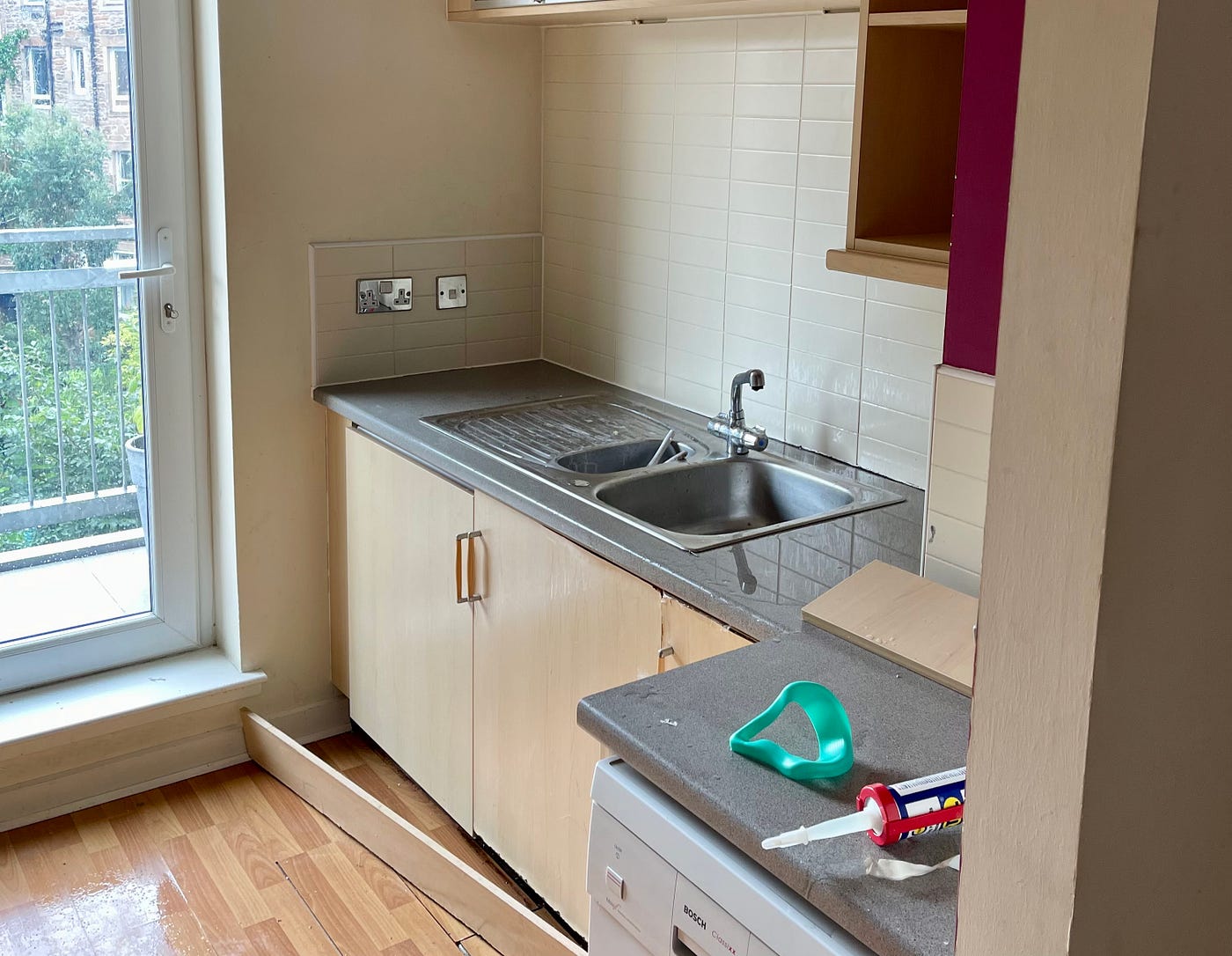
The moment it hit me
There’s a particular kind of sinking feeling you get as a landlord.
You’re not expecting perfection, but you are expecting control. A sense that, even if things go wrong, you’ll at least know about it early enough to manage it.
This wasn’t that.
This was walking into what should have been a routine move-out, expecting a clean, a bit of paint, maybe a few minor fixes… and realising almost immediately that something wasn’t right.
At first, it was subtle. A patch. A smell. A slight give underfoot.
The kind of thing you notice, pause on, and then start pulling at.
What we found
It wasn’t obvious on the surface. That’s what made it worse.
It was only when we started properly preparing the property for remarketing, lifting things, inspecting properly, going beyond what you’d normally see day-to-day, that the scale of it became clear.
There had been a leak.
Not dramatic. Not catastrophic. Just slow, consistent, and completely unchecked.
Over time it had worked its way:
Through flooring
Into the subfloor
Across adjacent areas
Down into the structure below
The kind of damage that builds quietly and reveals itself all at once.
And once you see it, you can’t unsee it.
The number
When the quotes came in, I remember thinking there must be a mistake.
This wasn’t a renovation. This wasn’t an upgrade.
This was fixing something that should never have been allowed to get this far.
£20,000
And the worst part?
There was no obvious place to point the finger.
The uncomfortable reality
The tenant hadn’t raised anything that suggested urgency.
The property manager had records. Messages. Activity. On paper, they had done what they thought was required. There was no clear moment where someone had said, “This is critical, act now.”
And legally, practically, the tenant wasn’t perceived to be liable.
So it sat in that frustrating middle ground. Everyone involved could justify their actions.
And yet I was left with the outcome.
That’s when it clicked
Up until that point, I’d thought about maintenance the same way most people do.
As a series of jobs.
Something breaks. You fix it. You manage cost. You optimise suppliers.
But standing in that property, looking at damage that had taken weeks or months to build, it became obvious that this framing is completely wrong. This wasn’t a job management problem.
It was a time problem.
What actually failed
The leak wasn’t the failure.
The failure was everything around it:
The hesitation to report clearly.
The lack of structured understanding when it was mentioned.
The absence of urgency in how it was handled.
The delay between signal and action.
At no point did the system step in and say: “This might look small, but it isn’t. Act now.” And without that, small problems are left to grow.
The part that frustrates me most
If you replay this scenario, nothing needs to be dramatically different to avoid it.
The tenant doesn’t need to be more diligent.
The property manager doesn’t need to work harder.
The tradesperson doesn’t need to be cheaper or faster.
The system just needs to respond differently, earlier.
Because the cost curve isn’t linear.
A small issue doesn’t stay small just because it looks that way at the start.
What changed for me
That experience shifted my focus completely. I stopped thinking about maintenance as something you manage. And started thinking about it as something you intercept.
Because once you’re reacting to visible damage, you’re already too late.
The real leverage is in what happens before that point.
Why Nestsen exists
Nestsen is built around a simple idea.
The earlier you understand something, the cheaper it is to fix.
So instead of relying on:
Unstructured messages
Manual triage
Delayed decisions
We focus on:
Capturing issues clearly at the source
Interpreting them immediately
Identifying risk early
Driving action without delay
Not to make maintenance cheaper in isolation.
But to stop £50 problems becoming £20,000 ones.
Press enter or click to view image in full size

looking better now
Key takeaways
The most expensive issues are often invisible until it’s too late
Damage compounds quietly and reveals itself suddenly
Everyone can act reasonably and still produce a bad outcome
The system, not the individuals, is where failure sits
Time between issue and action is the biggest cost driver
Prevention isn’t about effort, it’s about early understanding
Share this article
See Nestsen in action
Join property managers across the UK who have cut response times, reduced compliance risk and kept tenants happier with Nestsen.
Book a free demo →You might also like
What “Good” Property Maintenance Actually Looks Like
25 March 2026
Why Property Maintenance Still Feels Like 1998 (And Why That’s About to Change)
22 March 2026

Integrating with Agency Software
20 March 2026

The Property Management System Most UK Letting Agents Use (And Why It’s Starting to Break)
12 March 2026