Why Property Maintenance Still Feels Like 1998 (And Why That’s About to Change)
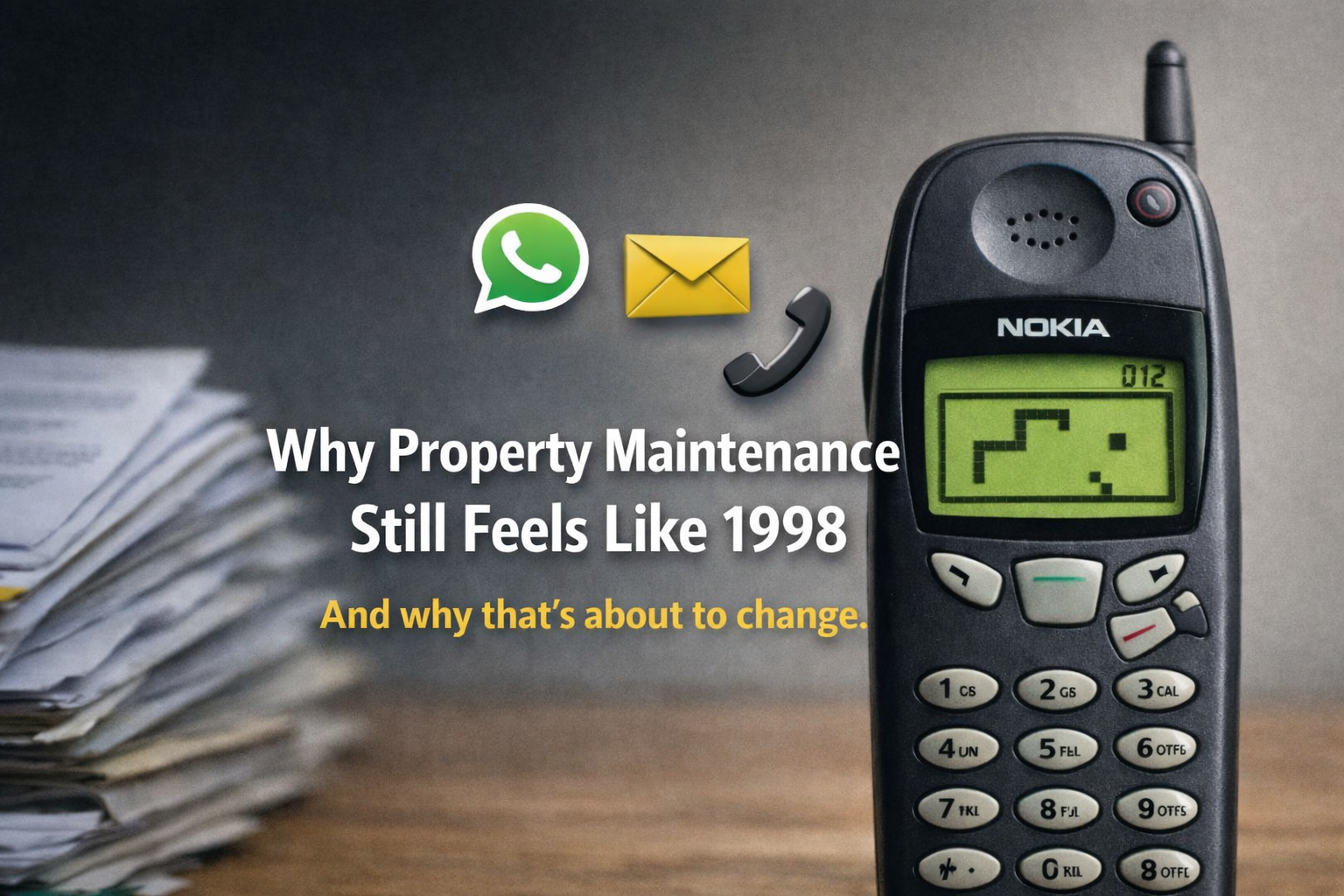
Why Property Maintenance Still Feels Like 1998
And why that’s about to change
I recently ran a poll asking a simple question:
How do maintenance issues usually reach your team?
The answers weren’t surprising — but they were revealing.
Most responses pointed to the same thing:
👉 A mix of channels
Calls. Emails. WhatsApp. The occasional “I mentioned it last week.”
On the surface, that sounds manageable.
In practice, it creates something very different.
📉 The hidden problem: fragmentation
When maintenance requests arrive through multiple channels, something subtle but important happens.
Information becomes:
scattered
inconsistent
difficult to track
And over time, that leads to:
delays in response
missed details
unclear accountability
increased complaints
Not because teams aren’t capable —
but because the structure isn’t there to support them.
🔍 The real challenge isn’t fixing the issue
It’s understanding what actually happened.
Before a contractor is instructed or a repair is resolved, teams often need to:
piece together messages from different sources
work out timelines
clarify what was reported (and when)
In many cases, this becomes:
👉 forensic work before the real work even begins
⚠️ Why this matters more now
With increasing focus on:
compliance
audit trails
response times
tenant experience
The ability to clearly demonstrate:
what was reported
when it was received
how it was handled
is becoming essential.
And that’s difficult to achieve when communication is fragmented.
🔄 A familiar shift
There’s an interesting parallel here.
In the late 90s, organising anything without mobile phones was chaotic.
People relied on:
fixed meeting points
assumptions
guesswork
Then communication became centralised — and everything changed.
Not dramatically at first.
But permanently.
🚀 The shift already underway
Property management feels like it’s at that same point now.
Moving from:
scattered communication
→ to
structured, centralised systems
And when that shift fully happens, it likely won’t feel revolutionary.
💡 It will feel obvious
A quiet realisation that:
👉 we’ve been making things harder than they needed to be
Or perhaps more accurately:
👉 we’ve been accepting the chaos as normal
🏁 Final thought
The challenge isn’t capability.
It’s structure.
And the teams that recognise that shift early
will be the ones who scale more effectively, respond more consistently,
and deliver a better experience — without increasing workload.
Share this article
See Nestsen in action
Join property managers across the UK who have cut response times, reduced compliance risk and kept tenants happier with Nestsen.
Book a free demo →You might also like