What “Good” Property Maintenance Actually Looks Like
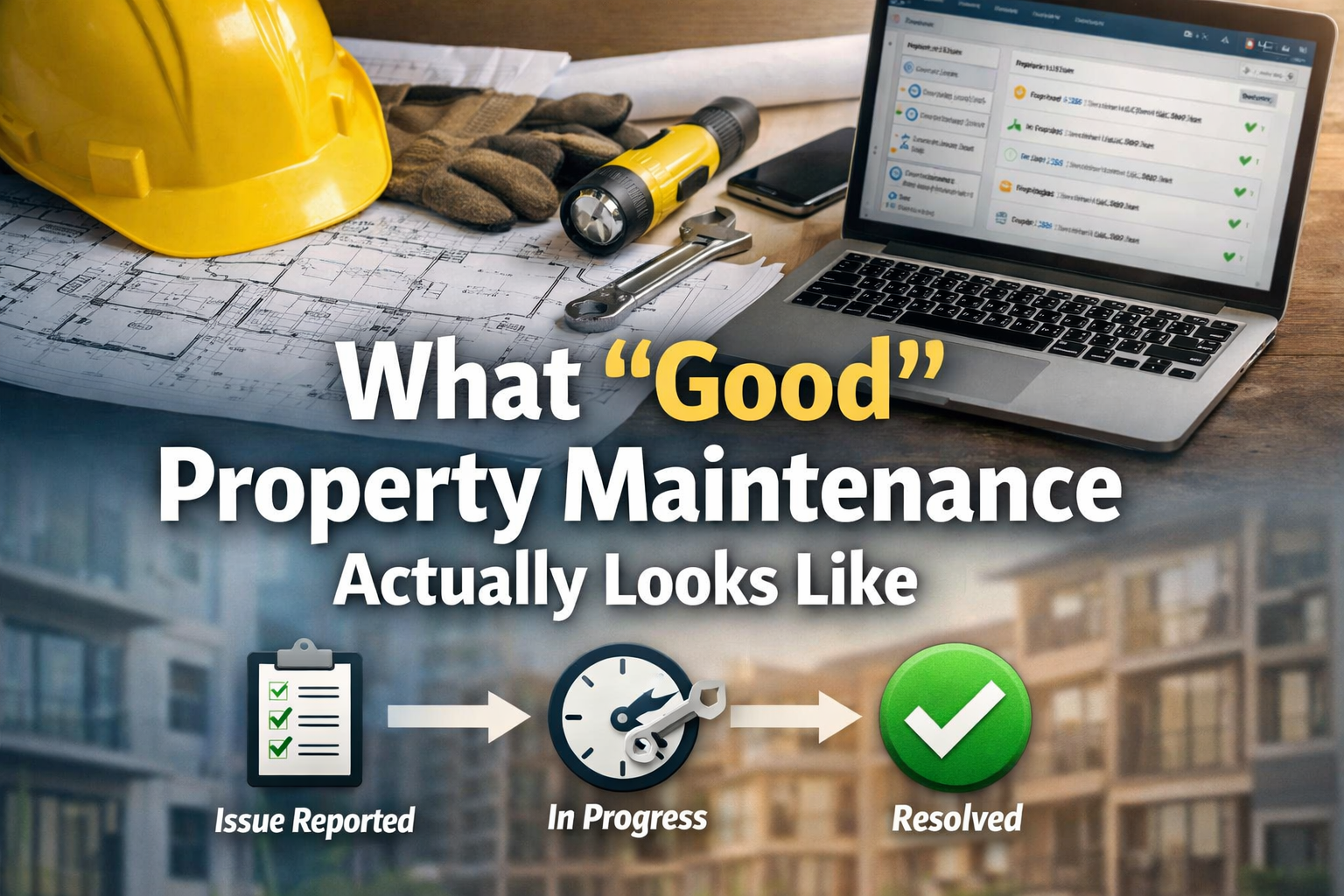
Everyone talks about improving maintenance processes—but very few define what “good” actually looks like. Here’s a simple framework for building clarity, control, and accountability.
Expert perspectives on property management trends, maintenance best practices, and industry insights.
Fresh thinking from the Nestsen team.
Everyone talks about improving maintenance processes—but very few define what “good” actually looks like. Here’s a simple framework for building clarity, control, and accountability.
Property maintenance isn’t broken — it’s fragmented. When requests arrive through calls, emails and WhatsApp, teams spend more time piecing together information than resolving issues. Here’s why that’s changing.
Every property management platform faces the same problem. Your data model is well-defined. The third-party system your client wants to connect to has a completely different one — and you only find out what it looks like when you start the integration.
Many UK letting agents unknowingly run property management through their inbox. As regulation increases, email threads are becoming a risky way to manage maintenance, communication, and compliance records.
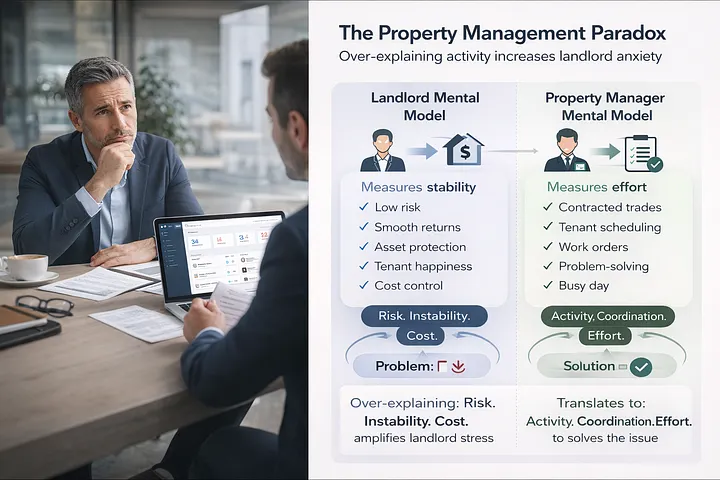
Many disagreements between landlords and property managers aren’t really disagreements about service quality. They are disagreements about what information actually matters. Property managers see the operational complexity behind running a property. Landlords see a financial asset that should quietly perform. When managers communicate effort instead of outcomes, landlords often interpret the situation as instability rather than professionalism. Understanding this behavioural dynamic allows property managers to communicate more effectively and deliver better experiences for both landlords and tenants.
Most letting agencies don’t realise how reactive their operations are until they run a simple test. If a council audit landed tomorrow, could you evidence every maintenance action and compliance update within ten minutes?
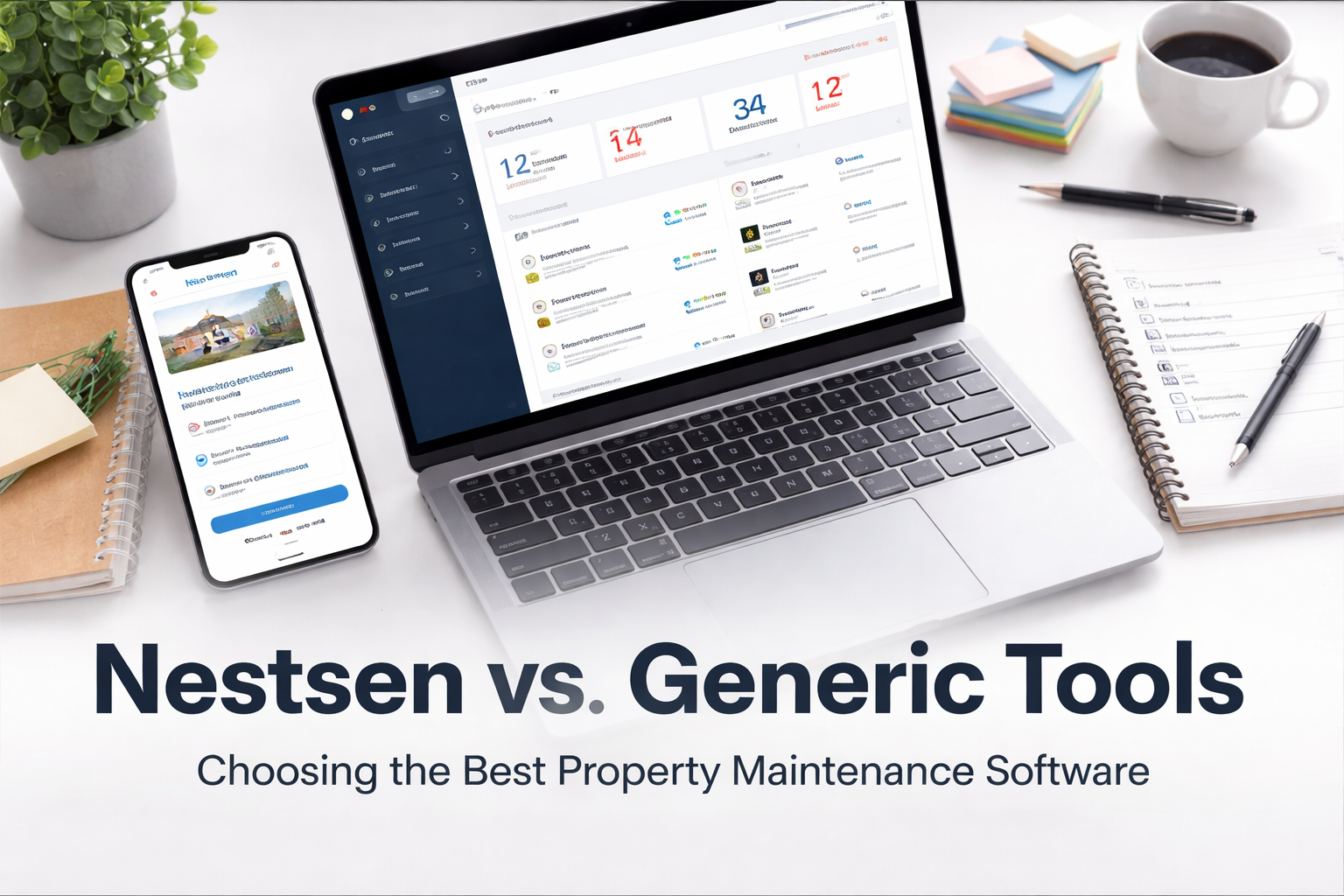
Five platforms. Ten capability domains. Fifty points. One winner — and it wasn't close. Nestsen scored 49/50. The nearest competitors scored 33.
Conversations with property managers are shifting away from speed and towards documentation. In a more regulated rental environment, the real risk isn’t slow response times — it’s whether teams can clearly evidence what was reported, what was communicated, and how decisions were made if issues are later challenged.
TL:DR; Property managers often avoid adopting maintenance software due to habit, fear of disruption, and reliance on generic tools. But these create hidden costs, inefficiencies, and scaling problems. Purpose-built platforms outperform generic systems — and Nestsen stands out as one of the best property maintenance management tools because it automates triage, communication, scheduling, and visibility in one intelligent workflow.
No-fault evictions are ending — and the property landscape is shifting fast. In this new era, the managers who stay protected will be the ones with airtight documentation and traceable decisions
Welcoming Stephen to the team as Nestsen’s new commercial director and co-founder
2025 was the year Nestsen evolved from an MVP into a comprehensive property operations platform. With major advances in workflow automation, AI scheduling, field operations, analytics, and security, the focus was on depth, reliability, and trust. These foundations position Nestsen to accelerate responsibly in 2026, with refinement and real-world impact at the core.
Nestsen has been recognized as #22 AI company on F6S for August 2025. This milestone highlights our leadership in using AI for property operations, builds credibility, attracts new opportunities, and underscores the impact of our team’s innovation.
The end of summer is the seasonal reset property managers can’t ignore. As tenants return with higher expectations and autumn brings fresh challenges like heating failures and damp issues, strong operations make the difference between firefighting and staying ahead.
A light-hearted look at property maintenance through the lens of an Oasis reunion tour. Tenants as fans, landlords and maintenance teams as the Gallaghers, and your ops system as the tour manager keeping the chaos in check.
Summer holidays are the quiet stress test of property management. When staff are away, brittle processes show their cracks — and tenants feel it. This post explores how to build a holiday-proof operations system that doesn’t rely on heroic effort, but smart, resilient workflows.
The final post in our rent control series explores the “Boomerang Effect”—how well-meaning policies can circle back and hurt the very people they were meant to protect. We explore smarter alternatives that strengthen the housing system instead of destabilising it.
Rent controls often seem like a helpful nudge, but they can snowball into much bigger market failures. Using Berlin, New York, and Scotland as examples, we explore the hidden forces that make rent freezes a risky avalanche waiting to happen—and propose better solutions instead.
Rent controls are one of those policies that sound tenant-friendly, but often create scarcity, disrepair, and chaos. Drawing from stories in New York, Berlin, and Scotland, we unpack why this paradox exists—and what smarter alternatives could look like.
Most property platforms show a version of operations — but not the truth. That leads to delays, confusion, and mistrust. At Nestsen, we believe your ops platform should mirror reality. By connecting tenants, trades, and teams in real time, we provide a transparent, live view of every issue as it unfolds — and that clarity makes all the difference.
The first step in handling a maintenance issue is the most important — and often the most overlooked. Smart triage helps property teams assign the right trade, avoid delays, and resolve issues faster. Platforms like Nestsen automate this critical step to unlock efficiency, trust, and time savings across your operation.
Too many property managers are one tradesperson away from chaos. Building “bench strength” — a diverse and dependable network of contractors — can radically improve resilience and response time in maintenance. The right digital tools make it seamless to automate and scale this approach.
Maintenance isn’t a series of isolated problems — it’s an interconnected system that affects tenants, costs, and long-term business health. Systems thinking helps property managers move from firefighting to proactive improvement. With tools like Nestsen, you can manage the whole forest, not just the trees.
Your maintenance process reflects your overall operational health. If it’s chaotic or manual, there’s likely hidden inefficiency dragging your business down. Platforms like Nestsen help surface what’s really going on so you can take action, improve service, and scale with confidence. Clarity is the first step to control.
Time is the most overlooked resource in property management—and the first thing to run out. Manual maintenance workflows eat up hours each week, from tenant calls to trade coordination. Smart platforms like Nestsen automate triage, scheduling, and updates, giving property teams their day back while improving tenant service. If your team is always short on time, maybe it’s time for a better system.
Property management shouldn’t feel like a constant firefight. 🔥 Yet, many landlords and property managers are stuck in a reactive cycle—dealing with last-minute emergencies, frustrated tenants, and expensive repairs. The solution? Prevention over reaction. Smart property management uses automated issue detection, preventative maintenance scheduling, and instant trade allocation to stop problems before they start. The result? Less stress, lower costs, and happier tenants. 🚀 Are you still firefighting? Or are you ready to take control of maintenance?
Delaying property maintenance isn’t just a minor inconvenience—it’s a hidden cost that escalates quickly. A small leak can turn into a flood, a faulty boiler can lead to emergency call-outs, and slow responses frustrate tenants. Yet, property managers still struggle with delays due to late reporting, manual admin, and the hassle of finding the right tradesperson. The solution? Smart automation. By streamlining issue reporting, trade matching, and scheduling, maintenance gets done faster, saving time, money, and stress. The cost of waiting is too high. Are you still paying for delays?
Maintenance costs aren’t just about materials and labor—they’re about inefficiency. Slow issue reporting, manual coordination, and mismatched trades drive up costs unnecessarily. The biggest hidden expense? Wasted time. This article breaks down how delays, admin overload, and poor trade allocation make maintenance more expensive than it should be. More importantly, it shows how automation can slash these costs without sacrificing quality—by streamlining issue reporting, trade matching, and scheduling. The future of property maintenance isn’t about spending more—it’s about spending smarter.
Chasing tradespeople is one of the biggest time drains in property management. Missed calls, endless follow-ups, and scheduling nightmares lead to delays, unhappy tenants, and rising costs. The hidden cost? Time that could be better spent elsewhere—and emergency repairs that could have been prevented. This article explores how automation is changing the game, from instant issue triaging to automatic trade allocation, making property maintenance smoother, faster, and far less stressful. The future of maintenance isn’t about spending hours coordinating repairs—it’s about letting smart tech do the heavy lifting. Read on to find out how.
Most property businesses think of maintenance as a landlord vs. tenant issue. In reality, tenants are the first and best source of information about potential problems—but only if the reporting process is easy, fast, and effective. When issue reporting is slow and clunky, small problems turn into expensive repairs. But with the right tech, we can turn tenants into proactive maintenance whistleblowers—saving time, money, and frustration for everyone.
Rent control might sound like a win for tenants, but the reality is far more complex. While capping rents can offer short-term relief, it distorts the housing market, reduces rental supply, and worsens affordability in the long run. Scotland risks following the path of cities like San Francisco, Stockholm, and Berlin, where rent control led to housing shortages, declining property conditions, and fewer choices for renters. The real solution? Expanding housing supply, not capping prices.
Many property managers and landlords operate in the dark when it comes to maintenance issues—reacting instead of proactively managing problems. This post will explore how technology can illuminate maintenance blind spots, reduce unexpected costs, and create a smoother tenant experience.
By identifying and addressing key energy inefficiencies, I reduced my household's grid consumption from 12,000kWh to 8,000kWh in a year. Through targeted changes like switching to efficient appliances, eliminating vampire devices, and utilizing solar power, I significantly lowered both my energy costs and carbon footprint.
A deep dive into my home solar setup, real-world performance vs. expectations, and lessons learned after nearly two years of data collection.
Two Years into Solar Power: Key Points Solar power can be daunting but worthwhile. Key terms: kW/kWh: Power vs. energy used. Solar Panels: Best south-facing, but east/west still work. Inverter: Converts DC to AC; limits energy use. Base/Peak Load: Your home’s energy needs. Load Shifting: Use batteries to save costs. Smart Meters: Track usage and enable exports. Know these basics to get the most from solar. Next, my installation experience and lessons learned.
Learn proven strategies to increase your rental property returns while maintaining quality
Highlighting the disconnect between landlords and tenants in property management, focusing on maintenance inefficiencies and miscommunication. It advocates using technology to streamline processes, align interests, and improve satisfaction for both parties by treating properties as both homes and investments.
Discover how AI and automation are transforming property management, creating seamless experiences for tenants and streamlining operations for property managers.
First-time landlords can simplify their responsibilities by partnering with property managers and leveraging AI tools like Nestsen. From tenant screening to predictive maintenance, these solutions enhance efficiency and tenant satisfaction.
We use cookies